
Scheduling in Production Planning—Boosting On-Time Shoots

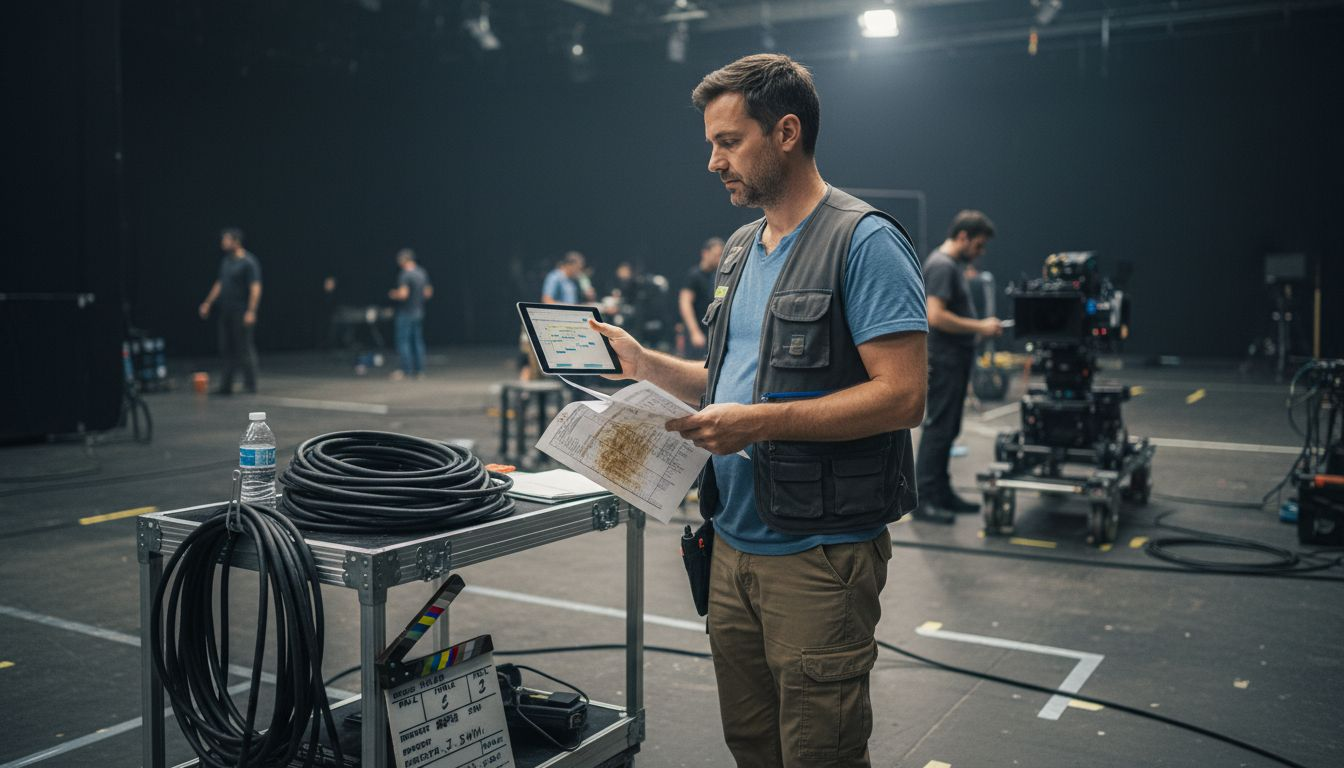
Juggling unpredictable weather in Zurich or coordinating crews across the Swiss Alps often turns film production into a complex puzzle. For international producers, mastering scheduling in production planning is more than simply filling in a calendar. Choosing the right scheduling approach not only protects budgets and timelines but also builds a framework that keeps every shoot on track, no matter the challenges Switzerland throws at your project.
Table of Contents
Key Takeaways
Point | Details |
Strategic Importance of Scheduling | Scheduling is not merely administrative; it is a vital strategy that impacts project success and team efficiency. |
Advanced Techniques | Utilizing modern software tools allows for real-time adjustments and dynamic planning in film production scheduling. |
Critical Challenges | Producers must anticipate disruptions such as resource unavailability and weather issues, employing proactive strategies to mitigate their impact. |
On-Time Execution Strategies | Consistent monitoring and adaptive rescheduling are essential for ensuring timely performance in production workflows. |
What Scheduling Means in Production Planning
Production scheduling represents a critical strategic process that transforms raw project plans into executable timelines. At its core, scheduling involves systematically organizing tasks, allocating resources, and establishing precise time frames to ensure efficient workflow progression. Production planning methodologies provide the fundamental framework for transforming creative concepts into achievable film shoot sequences.
Scheduling in film production encompasses several key components that collectively enable smooth operational execution:
Resource Allocation: Precisely mapping crew, equipment, and location availability
Time Management: Creating realistic timelines that account for potential delays
Sequence Planning: Determining optimal shooting order based on logistical constraints
Budget Optimization: Minimizing downtime and reducing unnecessary production expenses
The technical complexity of scheduling requires producers to balance multiple interdependent variables simultaneously. Advanced scheduling techniques now integrate digital tools that enable real-time tracking and dynamic adjustment of production parameters. Modern scheduling approaches leverage software platforms that can instantly recalculate timelines when unexpected changes occur, providing unprecedented flexibility.
Understanding scheduling means recognizing it as more than a simple administrative task. It is a strategic planning mechanism that directly impacts project success, team efficiency, and overall production quality. Effective schedulers must anticipate potential bottlenecks, create contingency plans, and maintain clear communication channels across all production teams.
Pro tip: Develop a comprehensive communication matrix that outlines specific responsibilities and communication protocols for each team member during scheduling processes.
Major Scheduling Types and Their Uses
Production scheduling requires nuanced approaches tailored to specific project environments. Comprehensive scheduling classifications reveal multiple strategic methodologies designed to optimize workflow efficiency across different production scenarios.
Film production typically utilizes several primary scheduling types:
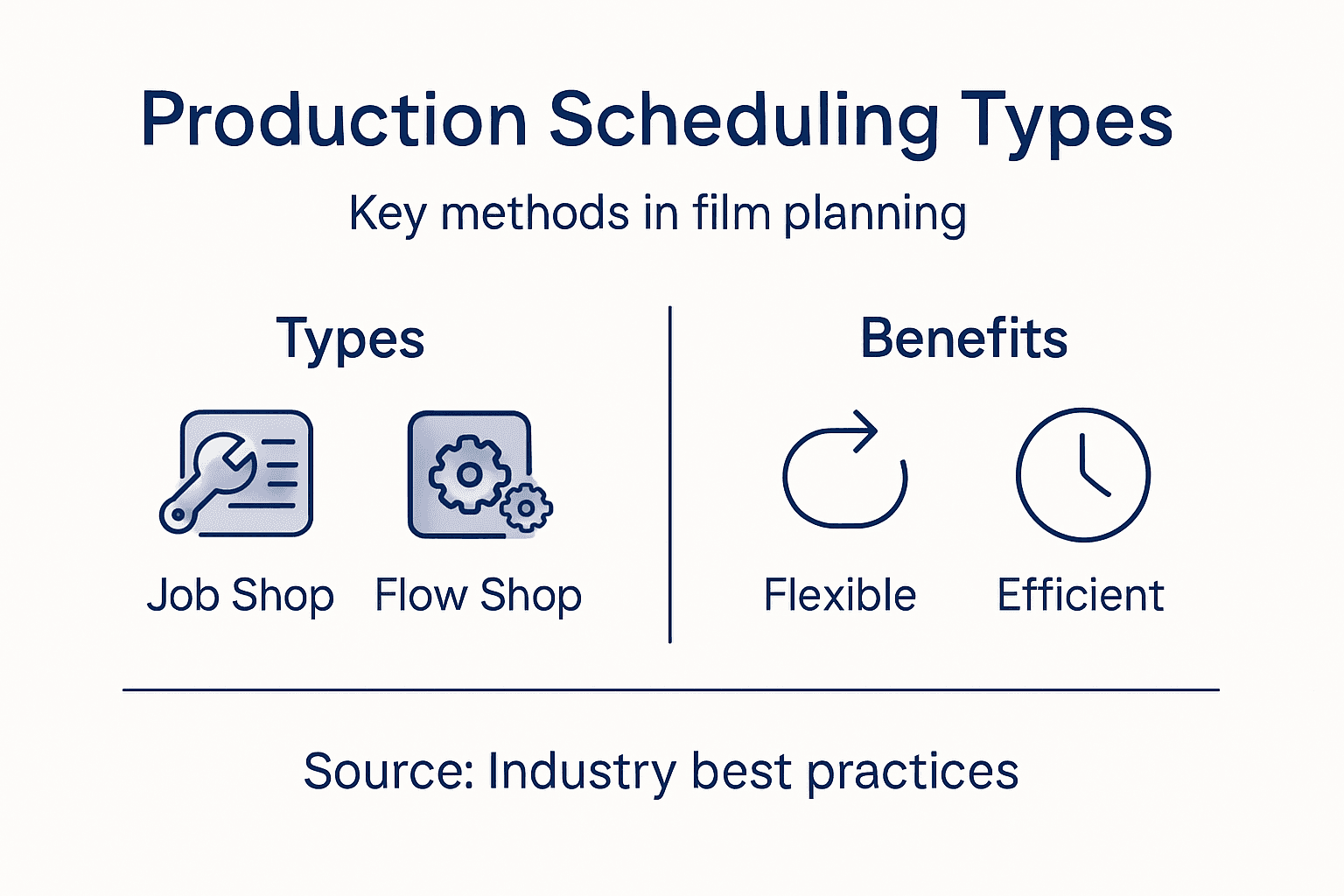
Job Shop Scheduling: Ideal for complex, unique projects requiring customized task sequences
Flow Shop Scheduling: Best for linear, repetitive production processes with standardized workflows
Hybrid Scheduling: Combines multiple approaches to handle mixed production requirements
Distributed Scheduling: Manages geographically dispersed production resources and teams
Each scheduling type offers distinct advantages depending on project complexity and operational constraints. Advanced AI scheduling techniques now enable more dynamic and responsive planning mechanisms, allowing producers to adapt quickly to changing production environments. Modern scheduling systems integrate real-time data analysis, predictive modeling, and adaptive resource allocation strategies.
Here’s how the main film production scheduling types compare:
Scheduling Type | Best Use Case | Flexibility | Complexity Level |
Job Shop Scheduling | Customized, irregular workflows | Very high | High |
Flow Shop Scheduling | Standardized, repeatable tasks | Low | Moderate |
Hybrid Scheduling | Mixed projects with varied requirements | Moderate to high | Very high |
Distributed Scheduling | Multiple locations or remote teams | High | High |
Understanding these scheduling types empowers production managers to select the most appropriate methodology for their specific project requirements. The key is matching scheduling complexity to project scale, team capabilities, and potential logistical challenges. Successful scheduling transforms potential chaos into structured, efficient production workflows.
Pro tip: Create a flexible scheduling template that allows for quick recalibration and resource reallocation during unexpected production challenges.
Workflow Integration and Crew Coordination
Successful film production depends on seamless workflow integration and precise crew coordination. Smart scheduling strategies enable production teams to synchronize complex operational requirements and manage personnel resources effectively.
Effective workflow integration involves multiple critical components:
Communication Protocols: Establishing clear communication channels and reporting structures
Resource Tracking: Real-time monitoring of crew availability and equipment status
Dynamic Scheduling: Flexible task allocation that adapts to changing production conditions
Cross-Department Collaboration: Ensuring smooth information exchange between different production teams
Advanced digital technologies now provide sophisticated tools for managing intricate production workflows. Digital platforms enable instantaneous updates, predictive resource management, and seamless crew coordination across geographically dispersed teams. These technologies transform traditional linear scheduling into dynamic, responsive systems that can quickly recalibrate project timelines and personnel assignments.
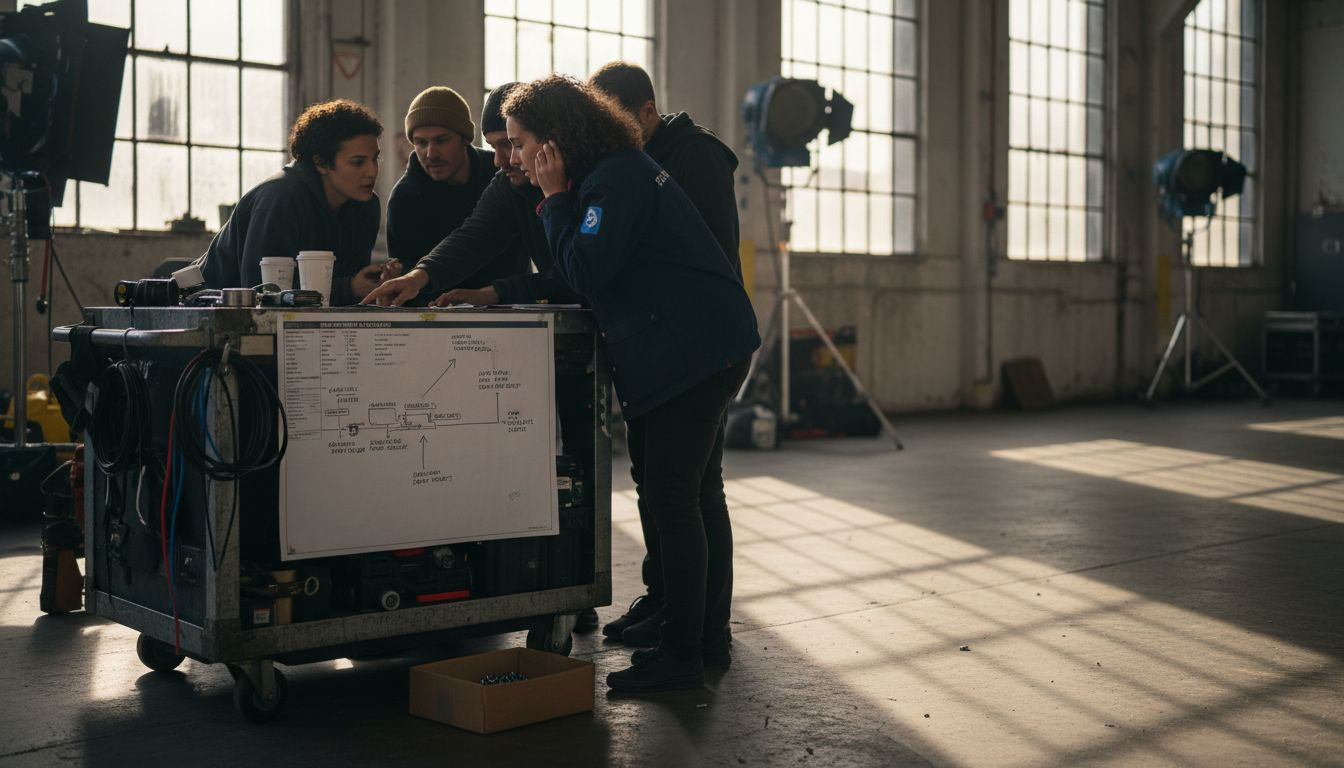
The ultimate goal of workflow integration is creating a harmonious production ecosystem where every team member understands their role, responsibilities are clearly defined, and potential bottlenecks are anticipated and mitigated proactively. Successful coordination requires a combination of strategic planning, technological support, and human communication skills.
Pro tip: Implement a centralized communication dashboard that provides real-time updates and transparent task tracking for all crew members.
Common Challenges and Delays in Scheduling
Film production scheduling faces numerous complex obstacles that can derail even the most meticulously planned projects. Production planning challenges reveal a landscape of potential disruptions that require strategic anticipation and proactive management.
The most critical scheduling challenges include:
Resource Availability: Unexpected crew or equipment unavailability
Weather Complications: Unpredictable environmental conditions affecting outdoor shoots
Location Restrictions: Permit delays or unexpected location access issues
Technical Equipment Failures: Unexpected breakdowns of critical production gear
Talent Scheduling Conflicts: Actor availability and last-minute schedule changes
Scheduling uncertainty analysis demonstrates that effective delay management requires flexible strategies and robust contingency planning. Modern production teams must develop adaptive frameworks that can quickly recalibrate timelines and reallocate resources when unexpected challenges emerge. This approach transforms potential disruptions from critical failures into manageable adjustments.
The table below summarizes common scheduling disruptions and possible mitigation strategies:
Scheduling Challenge | Potential Impact | Proactive Mitigation Strategy |
Crew or Gear Unavailability | Delayed shoots, cost overruns | Maintain backup lists and vendors |
Weather-Related Interruptions | Lost outdoor shoot days | Build weather contingencies into plan |
Location Permit Issues | Restricted access, last-minute moves | Secure permits early, flexible sites |
Equipment Failure | Halted production, repair costs | Schedule regular maintenance checks |
Talent Scheduling Conflict | Postponed scenes, casting changes | Negotiate flexible actor contracts |
Successful scheduling management goes beyond mere technical planning. It demands a holistic understanding of human dynamics, technological limitations, and the inherent unpredictability of creative production environments. Producers must cultivate resilience, maintain open communication channels, and develop multiple backup scenarios to navigate the complex landscape of film production scheduling.
Pro tip: Develop a comprehensive contingency matrix that outlines potential scheduling disruptions and pre-planned alternative strategies for each identified risk.
Strategies for Reliable On-Time Execution
Film production success hinges on implementing precise execution strategies that transform theoretical planning into actual performance. Advanced scheduling methodologies provide comprehensive frameworks for converting complex production requirements into reliable, time-sensitive workflows.
Key strategies for maintaining on-time production performance include:
Real-Time Monitoring: Continuous tracking of project progress and immediate issue identification
Adaptive Rescheduling: Dynamic adjustment of timelines and resources based on emerging challenges
Buffer Time Management: Strategic insertion of contingency periods to absorb potential delays
Communication Optimization: Establishing clear, rapid communication protocols across production teams
Technology Integration: Leveraging digital tools for instantaneous coordination and tracking
Sustainable scheduling models demonstrate that reliability emerges from a combination of technological sophistication and human adaptability. Modern production teams must develop integrated approaches that balance predictive planning with flexible responsiveness. This means creating robust systems that can anticipate potential disruptions while maintaining the agility to modify plans rapidly.
Successful on-time execution requires a holistic approach that transcends traditional linear planning. Producers must cultivate a proactive mindset, invest in advanced technological infrastructure, and develop team capabilities that enable swift, coordinated responses to unexpected challenges.
Pro tip: Create a comprehensive digital dashboard that provides real-time visibility into all critical production metrics, enabling instant decision-making and resource reallocation.
Ensure On-Time Shoots with Expert Scheduling Support
Effective production scheduling requires precise resource allocation, dynamic time management, and seamless crew coordination to overcome challenges such as unexpected delays and complex logistics. If you are facing these hurdles and want a trusted partner who understands how to transform intricate scheduling into smooth, reliable workflows, explore how our team can help. With over 20 years of experience handling permits, sourcing expert crew and equipment, and managing every logistical detail, we specialize in delivering worry-free, on-time film productions in Switzerland.
Do not let scheduling complexities jeopardize your shoot. Visit Video Production Switzerland today to start with a free consultation and discover tailored solutions for your project. Learn more about our expert logistical management and trusted local production support designed to keep your production on schedule and under budget.
Frequently Asked Questions
What is production scheduling in film?
Production scheduling is the process of organizing tasks, allocating resources, and establishing timelines for film projects to ensure efficient workflow progression and successful project completion.
What are the main types of scheduling used in film production?
The primary types of scheduling in film production are Job Shop Scheduling, Flow Shop Scheduling, Hybrid Scheduling, and Distributed Scheduling, each tailored to different project complexities and requirements.
How can modern technology enhance film production scheduling?
Modern technology, such as advanced scheduling software, enables real-time tracking, dynamic adjustments to timelines, and better resource allocation, which greatly enhances production efficiency and flexibility.
What are common challenges faced during production scheduling?
Common challenges include resource availability, weather complications, location restrictions, technical equipment failures, and talent scheduling conflicts, each requiring strategic anticipation and proactive management to mitigate disruptions.
Recommended
