
How to Stay Within Budget for Swiss Video Productions
- Pieter Nijssen

- Jan 30
- 8 min read

Managing a professional video shoot in Switzerland brings both excitement and pressure, especially when budget limits are tight and high-quality results are non-negotiable. Balancing creative demands with financial discipline matters to every international filmmaker or brand manager aiming for smooth, mistake-free production. This guide shares practical steps for defining production needs, avoiding financial surprises, and building a reliable workflow for seamless execution from your first planning session through final reconciliation.
Table of Contents
Quick Summary
Key Insight | Explanation |
1. Define clear production needs | Establish measurable categories for crew, equipment, and locations to maintain control over your budget. |
2. Research local production rates | Investigate regional crew, equipment, and location costs to strategically allocate your budget. |
3. Source reliable crew | Hire multi-talented, local professionals to optimize costs and enhance production quality. |
4. Streamline permit management | Plan logistics thoroughly and understand local regulations to avoid delays and complications. |
5. Track budget throughout production | Implement real-time tracking of expenses to prevent overspending and ensure financial control. |
Step 1: Define production needs and set clear budget limits
Defining your video production needs and establishing precise budget limits is the foundation of a successful project in Switzerland. By meticulously planning your financial framework, you’ll prevent costly surprises and ensure your creative vision remains achievable.
To start, break down your production requirements into clear, measurable categories. This process involves identifying essential video production components that directly impact your budget. Key areas to evaluate include:
Crew size and expertise: Determine the number and skill level of professionals needed
Equipment requirements: List specific cameras, lighting, and audio gear
Location costs: Budget for potential shooting locations in Switzerland
Post-production needs: Account for editing, sound design, and potential visual effects
Your budget should realistically reflect the complexity of your project. Professional video production requires careful financial planning across multiple stages - from pre-production through final delivery. Creating a comprehensive budget template helps anticipate potential expenses and provides a structured approach to resource allocation.
A well-prepared budget is your roadmap to a successful video production, preventing financial stress and ensuring high-quality results.
Pro tip: Always include a 10-15% contingency buffer in your budget to handle unexpected expenses or creative opportunities that may arise during production.
Step 2: Research local rates and optimize resource allocation
Researching local rates and strategically allocating resources can dramatically reduce your Swiss video production expenses. Understanding the nuanced landscape of production costs in Switzerland requires detailed investigation and smart planning.
Start by gathering comprehensive information about production cost strategies specific to the Swiss market. Your research should focus on several critical areas:
Crew rates: Compare freelance and agency professional rates across different Swiss regions
Equipment rental costs: Investigate local rental prices for cameras, lighting, and sound gear
Location expenses: Research standard fees for shooting in urban and rural Swiss settings
Post-production pricing: Understand editing and post-production service rates in major Swiss cities
Optimizing resource allocation means making strategic choices that balance quality and cost-efficiency. This might involve selecting multi-skilled crew members, negotiating package rates, or choosing alternative shooting locations that offer better value.
Smart resource allocation isn’t about cutting corners—it’s about maximizing your production value while maintaining professional standards.
Pro tip: Network with local Swiss production professionals and join industry groups to gain insider insights into current market rates and potential cost-saving opportunities.
Step 3: Source trusted crew and negotiate equipment deals
Sourcing a reliable crew and securing cost-effective equipment are critical steps in managing your Swiss video production budget. The right team and gear can make the difference between a smooth production and a financial nightmare.
Understanding video production crew rates helps you make strategic hiring decisions. When building your production team, consider these key strategies:
Skill diversity: Seek multi-talented professionals who can handle multiple production roles
Experience level: Balance experienced crew members with emerging talent to optimize costs
Local connections: Prioritize Swiss-based professionals who understand local production nuances
Freelance vs agency: Compare rates between independent contractors and production agencies
Negotiating equipment deals requires a proactive approach. Many rental companies offer discounts for:
Long-term rentals
Bulk equipment packages
Off-peak booking periods
Repeat customer agreements
Professional negotiations aren’t about paying the lowest price—they’re about creating mutually beneficial partnerships that deliver exceptional value.
Pro tip: Build relationships with local equipment rental houses and crew networks before your actual production to unlock better rates and more flexible terms.
Step 4: Plan logistics and streamline permit management
Effective logistics and permit management are the backbone of a successful Swiss video production. Navigating the complex landscape of local regulations and production requirements demands strategic planning and meticulous attention to detail.
Mastering production logistics and legal compliance involves a comprehensive approach to planning. When preparing for your Swiss shoot, focus on these critical aspects:
Permit research: Investigate specific location and filming permit requirements for each Swiss canton
Timeline coordination: Create detailed schedules accounting for permit processing times
Local authority contacts: Establish direct communication channels with municipal film offices
Insurance documentation: Prepare comprehensive liability and production insurance packages
Streamlining your logistics requires a systematic approach to managing multiple moving parts. Consider developing a centralized tracking system that monitors:
Permit application status
Location approvals
Transportation logistics
Equipment transportation clearances
Successful production logistics transform potential administrative nightmares into smooth, efficient shooting experiences.
Pro tip: Hire a local Swiss production coordinator who understands regional permit intricacies and can navigate bureaucratic processes more efficiently than international teams.
Step 5: Verify expenses and track budget throughout production
Tracking your budget meticulously is crucial for maintaining financial control during your Swiss video production. By implementing systematic expense verification, you can prevent cost overruns and ensure your project stays financially on track.
Utilizing real-time budget tracking technologies provides dynamic insights into your production finances. When monitoring expenses, focus on these critical strategies:
Categorize expenses: Break down costs by production department
Daily reconciliation: Compare actual spending against initial budget projections
Digital tracking: Use specialized budgeting software for accurate monitoring
Expense documentation: Maintain detailed records of all financial transactions
Effective budget verification involves several key steps:
Here is a quick comparison of budget tracking methods for video productions:
Method | Level of Detail | Real-Time Visibility | Suitability for Complex Projects |
Manual Spreadsheets | Basic cost breakdown only | Limited, not automated | Not ideal, error-prone |
Budgeting Software | High level, customizable | Real-time expense alerts | Highly effective, scalable |
Paper Records | Minimal, hard to structure | None, time-consuming | Not recommended |
Set up comprehensive tracking spreadsheets
Review expenses at least twice weekly
Flag any significant deviations immediately
Implement quick corrective actions for budget drift
Consistent financial oversight transforms potential budget chaos into predictable, controlled spending.
Pro tip: Allocate approximately 30 minutes daily to review and update your production budget to catch potential issues before they become expensive problems.
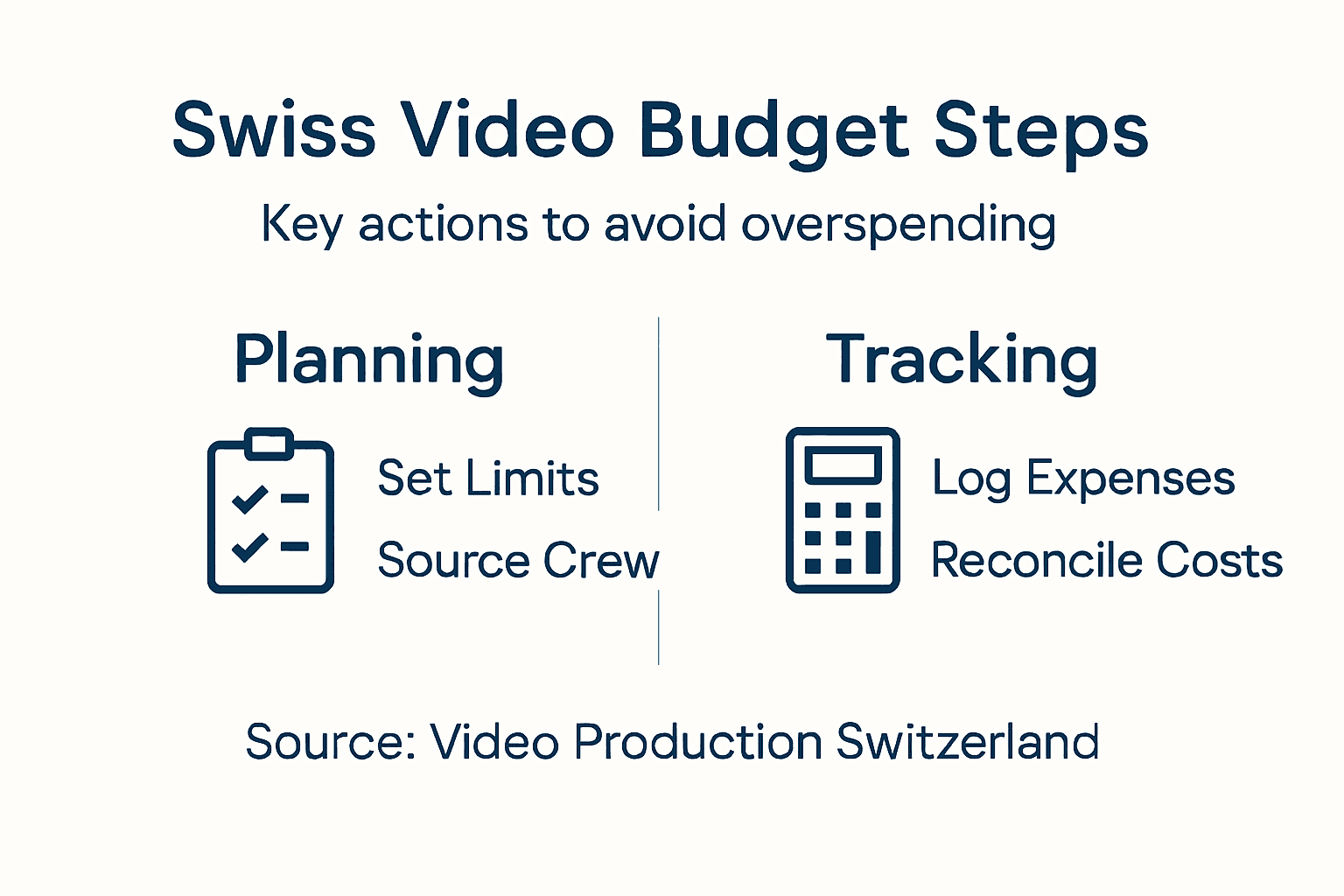
Step 6: Review results and finalize cost reconciliation
Cost reconciliation is the critical final phase where you validate your production’s financial performance and ensure complete transparency. This comprehensive review transforms raw financial data into meaningful insights for current and future productions.
Implementing comprehensive production accounting practices requires meticulous attention to financial details. When conducting your final budget review, focus on these essential elements:
Expense categorization: Analyze costs by department and production phase
Variance analysis: Identify and explain budget differences
Documentation verification: Cross-reference all financial records
Performance metrics: Evaluate budget adherence and cost efficiency
The reconciliation process involves several strategic steps:
Here is a summary of financial reconciliation focus areas at project close:
Focus Area | Purpose | Outcome for Stakeholders |
Expense Analysis | Identify spending patterns | Clear cost breakdown |
Variance Evaluation | Explain over/under-budget areas | Informed budget adjustments |
Documentation Review | Ensure all records match transactions | Full financial transparency |
Metrics Assessment | Measure budget adherence | Insights for future productions |
Compile comprehensive expense reports
Compare actual spending against initial budget
Calculate total production cost variance
Prepare detailed financial summary for stakeholders
Financial reconciliation isn’t just about numbers—it’s about understanding the economic story behind your production.
Pro tip: Create a standardized reconciliation template you can reuse across future productions to streamline your financial review process and track long-term budgeting trends.
Stay Within Budget and Stress Less for Your Swiss Video Production
Controlling costs while maintaining high quality is one of the toughest challenges in Swiss video production. This article clearly highlights the importance of thorough budget planning, local rate research, trusted crew sourcing, permit management, and ongoing expense tracking. Without expert local knowledge and reliable logistical support, unexpected fees and delays can quickly derail your project and inflate your budget.
You do not have to face these obstacles alone. At Video Production Switzerland, we specialize in helping international filmmakers and brands overcome the complexities of Swiss production. Benefit from over 20 years of experience in handling permit processing, trusted crew hiring, equipment rental negotiations, location scouting, and more to keep your shoot on time and within budget. Our client-centric approach and comprehensive services turn the overwhelming into the manageable so you can focus on your vision.
Ready for smooth productions with transparent budgeting and no surprises?
Discover how our expert team can safeguard your budget and streamline your Swiss shoot today by visiting Video Production Switzerland. Start your journey with a free consultation and take control of your project costs now.
Frequently Asked Questions
How can I clearly define my video production needs for a Swiss project?
To clearly define your video production needs, break down your project into specific components like crew size, equipment requirements, location costs, and post-production needs. Create a detailed checklist and categorize each production element to have a comprehensive view within 30 days.
What steps can I take to research local rates for video production in Switzerland?
To research local rates for video production in Switzerland, start by comparing crew rates and equipment rental costs in different Swiss regions. Utilize online resources to gather information and set aside a week to compile your findings for accurate budget planning.
How can I negotiate better deals for equipment rentals in Switzerland?
You can negotiate better deals for equipment rentals by approaching rental companies about discounts for long-term rentals or bulk packages. Prepare a list of your equipment needs and reach out to multiple providers within one week to secure the best rates.
What logistics should I consider when planning a video shoot in Switzerland?
When planning a video shoot, consider the necessary permits, local timelines, and insurance documentation. Develop a detailed logistics calendar that outlines these elements and start this process at least a month before your shooting date.
How can I effectively track my budget during video production?
To effectively track your budget, categorize expenses and reconcile daily spending against your initial budget projections. Use a simple spreadsheet to monitor costs and set aside 30 minutes daily for updates to maintain financial control throughout the project.
What should I include in my final cost reconciliation for a video shoot?
In your final cost reconciliation, include an analysis of expenses, variance evaluation, and documentation verification. Compile a detailed report that summarizes your financial performance and complete this process within one week after the project ends.
Recommended
